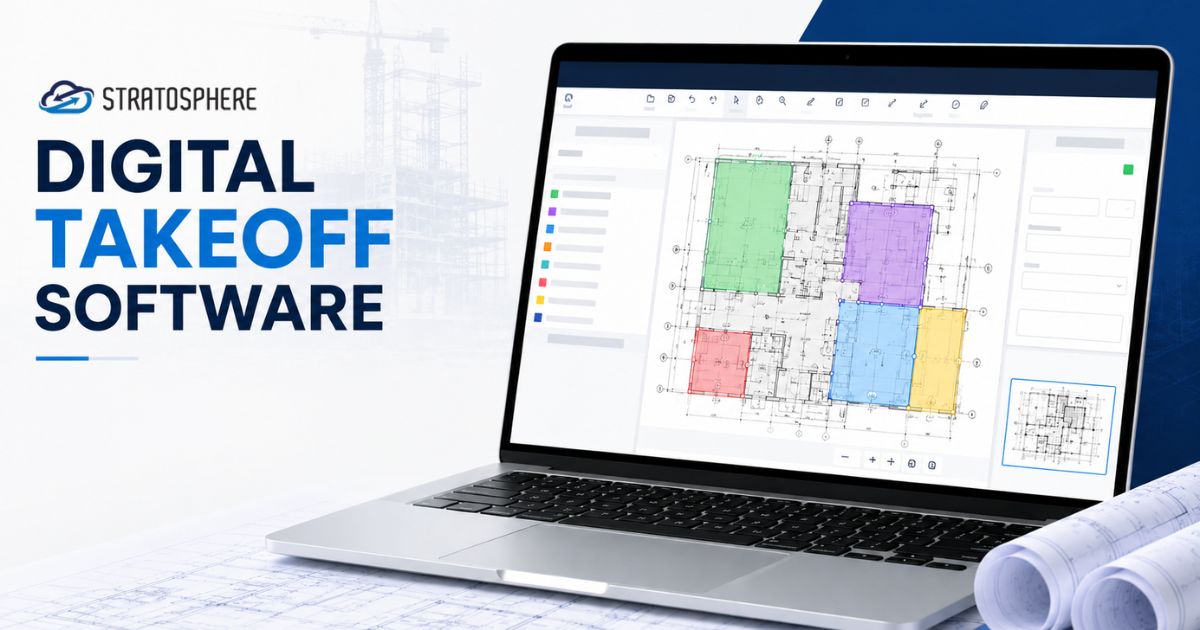
Construction teams still lose hours every day on manual blueprint reading, rough measurements, and spreadsheet corrections. One small mistake can break an entire estimate. That’s where takeoff software changes the workflow completely. It replaces paper-based calculations with structured digital measurement systems that improve speed, accuracy, and bid confidence without adding extra workload pressure.
Why Manual Blueprint Calculations Create Hidden Cost Pressure In Bidding Work?
Manual estimation looks simple on the surface, but it creates constant pressure during real project bidding. Estimators often deal with changing drawings, tight deadlines, and repeated recalculations that slow everything down. Common issues include:
- Measurement mismatch between team members
- Time loss during drawing revisions
- Repetitive quantity rechecking
- Spreadsheet entry mistakes under deadline pressure
So instead of focusing on winning bids, teams spend time fixing avoidable errors. That directly affects project profitability and workload efficiency.
How Digital Takeoff Software Converts Blueprints Into Measurable Digital Workspaces?
Digital takeoff software replaces physical plans with interactive digital drawings. Estimators no longer measure manually with scales or rulers. Instead, they click, mark, and calculate directly on-screen. Here is how the process typically works:
- Upload construction drawings into the system
- Zoom into exact blueprint sections without distortion
- Mark walls, areas, and materials digitally
- Auto-calculate quantities based on measurements
- Store everything in a structured project format
So instead of switching between paper, calculator, and Excel, everything stays inside one controlled environment.
Why Takeoff Software Improves Speed And Accuracy In Real Estimation Workflows?
The takeoff software does more than digitize drawings. It changes how estimation teams handle speed and accuracy together. Manual systems force a trade-off between fast work and careful checking. Digital systems remove that conflict. Key improvements include:
- Faster bid preparation cycles
- Reduced human measurement errors
- Consistent outputs across team members
- Instant updates when drawings change
- Better visibility into material quantities
So estimators don’t need to redo entire sheets when a revision arrives. The system updates it in real time.
How Digital Estimation Reduces Rework During Blueprint Revisions And Client Changes?
Blueprint changes happen often in construction projects. Manual workflows struggle here because every change triggers re-measurement and recalculation. Digital systems handle this differently:
- Updated drawings replace old versions instantly
- Previous measurements stay linked to project data
- Teams see revision history clearly
- No duplicate entry across spreadsheets
So instead of restarting work, estimators adjust only what has changed. That saves hours on every revision cycle.
Why Construction Teams Trust Digital Tools More Than Spreadsheet-Based Estimation?
Spreadsheets still exist in construction, but they no longer support modern bid speed. They rely heavily on manual entry and hidden formulas, which increases risk.
Digital tools solve this by:
- Connecting visual drawings with real-time data
- Removing complex formula dependency
- Reducing copy-paste errors
- Making quantity tracking more transparent
So estimators see both the drawing and the numbers together. That improves clarity during decision-making.
How Real Project Teams Use Digital Takeoff Software Under Deadline Pressure?
In real bidding scenarios, time pressure is intense. Teams often work on multiple tenders at once. Manual systems slow this down. With digital workflows, estimators:
- Switch between projects quickly
- Reuse measurement templates
- Share live updates with team members
- Export reports without rebuilding data
So even under tight deadlines, output stays consistent and structured.
Why Adoption Of Digital Tools Is Increasing In Construction Estimation Departments?
Construction companies don’t change systems quickly, but digital estimation tools are becoming more common because they solve real operational problems. Main drivers include:
- Faster bidding cycles compared to competitors
- Reduced dependency on senior estimators for basic tasks
- Easier remote collaboration across offices
- Improved accuracy in material forecasting
So companies that switch early gain an efficiency advantage in competitive bidding environments.
Read Also: Why Every Construction Project Needs PDF plan takeoff software?
What Changes After Moving From Manual Estimation To Digital Takeoff Systems?
The transition doesn’t just improve speed. It changes how teams think about estimation work. After adoption, teams usually notice:
- Less time spent on repetitive calculations
- More focus on strategy and pricing decisions
- Better coordination between project roles
- Fewer disputes over measurement accuracy
So estimation shifts from manual effort to structured digital planning.
How Estimators Lose Profit Without Even Noticing Small Blueprint Errors?
Small mistakes in manual blueprint work don’t look dangerous at first. A missing measurement or a wrong scale entry seems minor. But in real construction bidding, those small gaps quietly grow into cost leaks.
For example, one wrong quantity in material estimation can distort the full budget. That leads to underbidding or overbidding, both of which hurt project wins.
Digital systems reduce this risk by locking measurements directly into drawings. So instead of relying on repeated human checks, estimators work with structured, traceable data. That removes hidden profit loss caused by small manual errors that usually go unnoticed until it’s too late.
Why Construction Teams Struggle To Scale Estimation Work Without Digital Systems?
As project volume increases, manual estimation becomes harder to manage. A single estimator can handle only a limited number of drawings, revisions, and client changes before mistakes start slipping in.
This creates a bottleneck inside the bidding process. Teams either slow down output or risk accuracy loss. Neither option works in competitive bidding environments.
Digital takeoff systems solve this scaling issue by allowing multiple estimators to work on shared data in real time. So teams don’t duplicate effort or wait for one person to finish calculations. Instead, workflows flow in parallel, which makes scaling bids across multiple projects realistic without sacrificing accuracy.
Bottom Line
Manual blueprint calculations slow down bids and increase errors that affect project margins. Digital systems fix that gap by bringing speed, clarity, and accuracy into everyday estimation work. Teams now handle measurements, revisions, and reporting in one smooth flow instead of juggling paper and spreadsheets. This shift becomes even more effective when companies adopt digital takeoff software, since it removes repetitive manual effort and supports faster, more reliable bidding across projects.
Stratosphere by Tally Systems supports this transition by offering tools built for real construction workflows. It helps estimation teams improve accuracy, reduce delays, and handle project bidding with more confidence and control. If your team wants faster estimates and fewer errors in daily work, this is the kind of upgrade that changes how construction bidding gets done.
Read Also: Maximizing Accuracy: Benefits of Cloud-Based Takeoff Software
Frequently Asked Questions
Q1:What does digital takeoff software replace in construction work?
Digital takeoff software replaces manual blueprint measurements, paper-based calculations, and spreadsheet estimating with faster and more efficient digital workflows.
Q2:How does takeoff software improve estimation accuracy?
It improves accuracy by storing measurements digitally, reducing human errors, and keeping project quantities consistent across drawing revisions.
Q3:Can teams work together using digital takeoff tools?
Yes, digital takeoff platforms allow multiple estimators to collaborate, share updates, and work on the same project in real time.
Q4:Why do construction companies switch from manual methods?
Construction companies adopt digital takeoff software to speed up bidding, reduce mistakes, improve coordination, and increase overall estimating efficiency.
Q5:Does digital takeoff software help during blueprint changes?
Yes, it can quickly update measurements and project data when drawings change, helping estimators avoid rework and save time.



Omega
This is a paragraph.It is justify aligned. It gets really mad when people associate it with Justin Timberlake. Typically, justified is pretty straight laced. It likes everything to be in its place and not all cattywampus like the rest of the aligns. I am not saying that makes it better than the rest of the aligns, but it does tend to put off more of an elitist attitude.
Leave a Reply